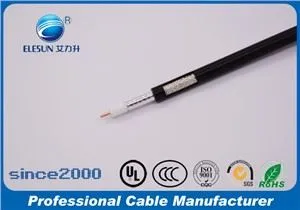
Radio frequency (RF) cables and interconnect components play a crucial, albeit unseen, role in quantum computing and communication. Because the state of qubits is extremely fragile, even the slightest external interference can cause them to lose their superposition property (i.e., quantum decoherence). Therefore, the core task of RF cables is to provide precise, stable, and ultra-low-noise microwave drive signals for qubits.
Specifically, the application of RF cables in the quantum field faces extremely high technical requirements, giving rise to a variety of cutting-edge solutions:
I. Core Application Challenges and Technical Requirements
To maintain the controllability of qubits in extremely low-temperature environments, quantum-specific RF interconnect components must meet the following stringent standards:
Extremely low loss and low noise: Minimizing signal attenuation and phase noise, preventing RF noise introduced by environmental thermal, magnetic, or mechanical sources from damaging the information stored in the qubits.
Stability at extreme temperatures: Quantum computers typically operate in environments close to absolute zero (below 4K or even 10mK), and the cables must maintain absolute stability of their electrical characteristics across a wide temperature range from room temperature to extremely low temperatures.
Magnetic Interference Resistant and Non-Magnetic Design:To prevent electromagnetic interference from causing computational errors, connectors and cables in critical signal path areas must use non-magnetic materials to ensure no electric field distortion.
High-Frequency and High-Density Cabling:As system complexity increases, support for high-frequency ranges from several GHz to tens of GHz is required, while connectors must have a compact form factor to adapt to space-constrained environments.
II. Mainstream Application Solutions and Product Forms:To address these challenges, the industry has launched several RF transmission solutions specifically designed for quantum applications:
1. Cryogenic Coaxial Cables and Special Connectors:
Cryogenic Superconducting RF Cables:Domestic companies such as Fujitec have successfully developed cryogenic superconducting RF cables and related microwave devices, specifically designed for stable signal transmission and control in extremely low-temperature environments. Small-batch supplies are currently being provided to domestic research institutes.
Niobium-Titanium Alloy/Copper-Nickel Cables:Some specialized manufacturers have independently developed superconducting niobium-titanium alloy cables with extremely low thermal conductivity (up to 10⁻⁸ W/mK) and low thermal conductivity copper-nickel cables to meet the thermal balance requirements of cryogenic quantum computing. 1. Miniaturized Non-Magnetic Connectors:Such as the SMP/SMPM series push-in connectors, these are not only compact and suitable for blind mating, but also offer non-magnetic solutions based on special non-ferrous metals, effectively resisting magnetic field interference.
2. RFoF (Radio Frequency Optical Fiber Transmission) Technology:In distributed quantum networks and long-distance quantum communication testing, traditional coaxial cables experience significant attenuation at high frequencies. RFOF solutions from companies like OpticalZonu are being adopted by institutions such as the Duke Quantum Center. This technology converts radio frequency signals into optical signals for transmission in optical fibers, reducing signal attenuation by 100 times compared to traditional copper cables, with latency down to the nanosecond level, greatly improving the fidelity of quantum entanglement distribution and high-precision network testing.
3. Customized Flexible Cable Assemblies:International manufacturers like Radiall utilize technologies such as 3D bending machines to customize semi-rigid or high-frequency SHF cable assemblies for quantum computers. These assemblies emphasize thinness, flexibility, and insulation, employing seamless/solderless processes to provide higher reliability, thereby enabling precise routing in complex quantum systems.