Unique Construction: Achieving Low-Loss Transmission Advantages
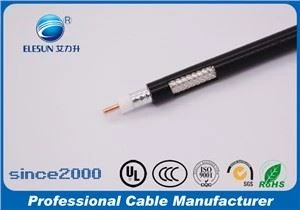
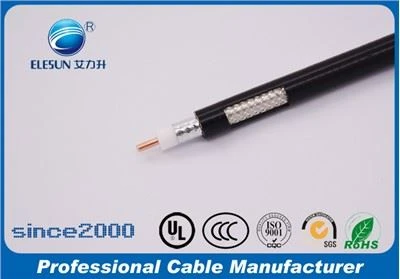
The superior performance of coaxial cables stems from their meticulously designed four-layer structure. Each layer works in concert to ensure stable transmission of high-frequency electrical signals:
**Center Conductor:** As the core of signal transmission, it is typically made of solid copper, multi-strand stranded copper (for greater flexibility), or copper-plated steel wire (common in cable television). For higher high-frequency performance requirements, the conductor surface is often silver-plated to further reduce signal attenuation.
**Dielectric (Insulation Layer):** Wrapped around the center conductor, its main function is to fix the conductor's position and prevent it from contacting the outer shield. Materials include solid plastic, foam plastic, or air-supported dielectric. Solid polyethylene is the preferred choice for most applications due to its low-loss characteristics; however, solid polytetrafluoroethylene (PTFE) is more suitable for ventilated spaces with flame-retardant requirements, meeting stringent safety standards.
**Outer Conductor (Shielding Layer):** This is crucial for the coaxial cable's resistance to interference. It typically consists of 1-4 layers of braided metal mesh and metal strips, and some are silver-plated to enhance performance. To enhance shielding effectiveness, a combination of thin metal foil and braided metal mesh is often used, sometimes with 2-4 layers of foil and braid alternately stacked to minimize external electromagnetic interference (ingress signal intrusion) and internal signal leakage (egress signal leakage).
Insulating sheath (outer protective sleeve): As the cable's "outer garment," it is primarily made of plastic materials such as PVC, and its performance needs to be adjusted according to the usage environment. For example, cables used in ventilation ducts, ceiling joists, and other air-circulating spaces require sheaths with flame-retardant and low-smoke properties; outdoor cables require additional UV-resistant and antioxidant components, and some are even filled with water-resistant gel to prevent moisture from seeping into the cable through minor breaks in the sheath.
Brian T., Sales Manager at COAX Connectors, once pointed out: "The key to coaxial cable signal transmission lies in maintaining consistent dimensions between the center conductor and the outer shield, providing a smooth transmission path while the shield isolates external radio frequency interference. During signal transmission within the cable body, loss primarily stems from energy absorption by the cable material; however, at the connector, due to abrupt changes in material and size, signal reflection becomes the main cause of loss." This viewpoint accurately reveals the close relationship between the construction and performance of coaxial cables.
Common Types: Adapting to Diverse Application Scenarios
Depending on different performance requirements and usage environments, coaxial cables have evolved into various types to meet diverse needs from consumer electronics to industrial and aerospace fields:
RG Series Cables: Named after "Radio Guide," these cables use numbers to distinguish dimensions, performance, and application scenarios, and also serve as a reference for connector contact dimensions. RG6 is commonly used for satellite television and broadband internet transmission, balancing performance and cost; RG11, with its lower attenuation rate, is suitable for long-distance transmission scenarios such as outdoor installations and large infrastructure projects; RG59 is mainly used in closed-circuit television (CCTV) systems, exhibiting stable performance in short-distance video transmission. Plenum (for ventilated spaces) cables: Specifically designed for air-circulating areas such as ventilation ducts and ceiling plenums, their outer sheath uses special flame-retardant materials. This not only inhibits the spread of flames in a fire but also reduces the release of toxic fumes, strictly complying with building safety codes and safeguarding communication security in densely populated areas.
Aerospace-grade cables: These cables significantly reduce size and weight while maintaining signal integrity to meet the stringent space and load requirements of aerospace equipment. They also pass tests for extreme temperatures, vibration, and shock resistance to ensure stable operation in harsh environments such as high altitudes and high radiation levels.
Furthermore, Times Microwave's LMR series cables, with their high flexibility, durability, and low loss, outperform the RG series cables of the same size. Their unique structural design simplifies connector installation and maintains reliable signal transmission in complex scenarios, making them a preferred solution in many professional fields.
Key Parameters and Standards: Ensuring Consistent Performance
To ensure coaxial cables function stably in various scenarios, strict industry standards must be followed, and key technical parameters must be carefully considered:
Impedance: As a core electrical parameter of coaxial cables, common specifications include 50Ω, 52Ω, 75Ω, and 93Ω. Among these, 50Ω is widely used in data transmission, voice communication, and general radio frequency (RF) applications; 75Ω, due to its suitability for video signal characteristics, has become the mainstream choice in broadcast television, telecommunications, and video transmission. For example, Adam Tech's coaxial cable assemblies are based on the 50Ω standard impedance, ensuring signal stability and transmission efficiency in RF applications, and all comply with EU RoHS environmental standards.
Industry Standards: The International Electrotechnical Commission (IEC) standard IEC 61196-1-108:2025 specifies the test methods for coaxial cable phase, phase constant, group delay, propagation speed, electrical length, and average characteristic impedance, providing a basis for performance evaluation of cables used in communication systems. Earlier IEC standards focused on cable material and construction requirements. The US military standard MIL-DTL-17, for high-reliability flexible and semi-rigid coaxial cables used in military and aerospace applications, details test procedures, material standards, and performance indicators to ensure cable durability in extreme environments.
Application Scenarios: A "Signal Link" Penetrating Multiple Fields
Today, coaxial cables are used in various fields, including daily life, industry, healthcare, and the military, serving as a "signal link" connecting various devices:
Civilian and Commercial Fields: Signal transmission in cable television, broadband internet, and fixed-line telephone networks relies heavily on coaxial cables. In homes and businesses, they are also used to connect routers, televisions, surveillance cameras, and other devices, ensuring stable transmission of high-definition video and high-speed data.
Industrial and Medical Fields: In industrial settings, coaxial cables provide reliable communication for high-speed computer data buses and automated equipment; in the medical field, their low-interference characteristics connect various precision medical devices, ensuring accurate transmission of diagnostic data and monitoring signals.
Special Application Innovations: With technological advancements, "Power over Coaxial Cable (PoC)" technology has emerged. Through dedicated converters, power and data can be transmitted simultaneously on the same coaxial cable, significantly simplifying the installation and expansion processes of monitoring systems and other equipment, and reducing cabling costs.
Extreme Environment Scenarios: The military and aerospace fields have the most stringent performance requirements for cables. Coaxial cables used in these scenarios must withstand extreme conditions such as high temperatures (some reaching 200°C), strong vibrations, high shocks, and radiation, providing stable signal links for radar, satellite communications, and aircraft control systems. For example, Cinch Connectivity Solutions' Semflex DKF metric test cable assembly covers a frequency range from DC to 18GHz, has an impedance of 50Ω, can withstand 500 mating cycles, and supports custom lengths, making it suitable for high-end test laboratories, production line testing, and real-world production scenarios; while brands such as OMNETICS focus on developing rugged, durable connectors for extreme environments, further improving the reliability of coaxial cables under harsh conditions.