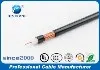
Polarization of signals in RG - 59A coaxial cables is a crucial concept that significantly impacts the performance and functionality of these cables. As a supplier of RG - 59A coaxial cables, understanding this phenomenon is essential for providing high - quality products and meeting the diverse needs of our customers.
What is Signal Polarization?
Signal polarization refers to the orientation of the electric field vector of an electromagnetic wave. In the context of coaxial cables like RG - 59A, it plays a vital role in determining how the signal is transmitted and received. There are two main types of polarization: linear polarization and circular polarization.
Linear polarization occurs when the electric field vector of the electromagnetic wave oscillates in a single plane. This can be either horizontal or vertical. For example, in a horizontally polarized signal, the electric field vector moves horizontally as the wave propagates. In contrast, a vertically polarized signal has its electric field vector oscillating vertically.
Circular polarization, on the other hand, involves the electric field vector rotating in a circular pattern as the wave travels. It can be either right - hand circular polarization (RHCP) or left - hand circular polarization (LHCP). The direction of rotation determines whether it is RHCP or LHCP.


Polarization in RG - 59A Cables
RG - 59A is a type of coaxial cable commonly used for various applications, including video transmission, CCTV systems, and some low - frequency communication applications. The polarization of signals in RG - 59A cables is mainly related to the way the cable is designed and the nature of the electromagnetic waves it carries.
The inner conductor of the RG - 59A cable is surrounded by a dielectric material, which is then enclosed by an outer conductor. When an electromagnetic wave travels through the cable, the electric field of the wave interacts with the conductors and the dielectric. The polarization of the signal can be affected by factors such as the cable's construction, the frequency of the signal, and the presence of external electromagnetic interference.
In most cases, RG - 59A cables are designed to support linearly polarized signals. The orientation of the polarization depends on the way the cable is installed and the characteristics of the transmitting and receiving equipment. For example, in a video surveillance system, the camera may transmit a horizontally polarized signal, and the receiver needs to be configured to receive the signal in the same polarization orientation to ensure optimal performance.
Factors Affecting Signal Polarization in RG - 59A
Cable Construction
The construction of the RG - 59A cable can have a significant impact on signal polarization. The quality of the inner conductor, the dielectric material, and the outer conductor all play a role. A well - constructed cable with a uniform dielectric and a proper outer conductor shielding can help maintain the polarization of the signal. For instance, if the dielectric material has irregularities, it can cause the electric field to distort, leading to a change in the polarization of the signal.
Frequency of the Signal
The frequency of the signal also affects polarization. Higher - frequency signals are more susceptible to polarization changes compared to lower - frequency signals. In RG - 59A cables, as the frequency increases, the interaction between the signal and the cable components becomes more complex, and the polarization may be more easily disrupted. For example, in a high - definition video transmission system using RG - 59A cables, the high - frequency signals may experience polarization shifts, which can result in a loss of signal quality.
External Electromagnetic Interference
External electromagnetic interference can cause the polarization of the signal in RG - 59A cables to change. Sources of interference can include power lines, radio transmitters, and other electronic devices. When the cable is exposed to these external fields, the electric field of the signal can be affected, leading to a change in polarization. This can result in signal degradation, such as reduced signal strength or increased noise.
Importance of Understanding Signal Polarization in RG - 59A
Understanding signal polarization in RG - 59A cables is crucial for several reasons. Firstly, it helps in ensuring the proper installation and configuration of the cable system. By knowing the polarization requirements of the transmitting and receiving equipment, installers can ensure that the cable is installed in the correct orientation to maintain the polarization of the signal.
Secondly, it is essential for troubleshooting signal problems. If there are issues with signal quality, such as poor video quality or low signal strength, understanding polarization can help identify the root cause. For example, if the polarization of the signal is misaligned, adjusting the orientation of the cable or the equipment can often resolve the problem.
Finally, it is important for product development and improvement. As a supplier of RG - 59A cables, we can use our knowledge of signal polarization to develop cables that are more resistant to polarization changes and can provide better performance in different environments.
Comparison with Other Coaxial Cables
When considering the polarization of signals, it is also useful to compare RG - 59A with other coaxial cables. For example, the RG6A Coaxial Cable is another popular coaxial cable used for similar applications. RG6A generally has a larger diameter and better shielding compared to RG - 59A. This can result in better performance in terms of signal polarization, as the improved shielding can reduce the impact of external electromagnetic interference.
The RG59B Coaxial Cable is also related to RG - 59A. RG59B may have some differences in construction and performance, which can affect signal polarization. For example, it may have a different dielectric material or a different outer conductor design, which can lead to different polarization characteristics.
The RG11A 75OHM Coaxial Cable is a larger - diameter coaxial cable with even better performance in terms of signal transmission. It can handle higher frequencies and has better shielding, which can help maintain the polarization of the signal more effectively.
Conclusion
In conclusion, the polarization of signals in RG - 59A coaxial cables is a complex but important concept. As a supplier of RG - 59A cables, we understand the significance of signal polarization in ensuring the performance and reliability of our products. By considering factors such as cable construction, signal frequency, and external electromagnetic interference, we can provide high - quality cables that meet the needs of our customers.
If you are interested in purchasing RG - 59A coaxial cables or have any questions about signal polarization and cable performance, please feel free to contact us for further discussion and procurement. We are committed to providing the best products and services to meet your requirements.
References
- Coaxial Cable Handbook, 3rd Edition.
- Electromagnetic Theory and Applications for Engineers.