

Hey there! As a supplier of RG178U coaxial cables, I often get asked about the inner conductor material of RG178U. So, I thought I'd take a moment to share some insights on this topic.
First off, let's talk about what RG178U is. RG178U is a type of coaxial cable that's commonly used in a variety of applications, including telecommunications, aerospace, and military. It's known for its high flexibility, low loss, and excellent electrical performance.
Now, onto the main question: what's the inner conductor material of RG178U? Well, the inner conductor of RG178U is typically made of copper-clad steel (CCS) or copper-clad aluminum (CCA).
Copper-clad steel is a composite material that consists of a steel core surrounded by a layer of copper. This combination offers a good balance of strength and conductivity. The steel core provides mechanical strength, making the cable more durable and resistant to bending and stretching. The copper layer on the outside ensures good electrical conductivity, which is crucial for efficient signal transmission.
On the other hand, copper-clad aluminum is another popular choice for the inner conductor of RG178U. As the name suggests, it's an aluminum core with a copper layer on the outside. Aluminum is lighter than copper, which makes the cable lighter overall. This can be a big advantage in applications where weight is a concern, such as in aerospace or portable devices. Despite being lighter, copper-clad aluminum still offers decent electrical conductivity, although it's not quite as good as pure copper.
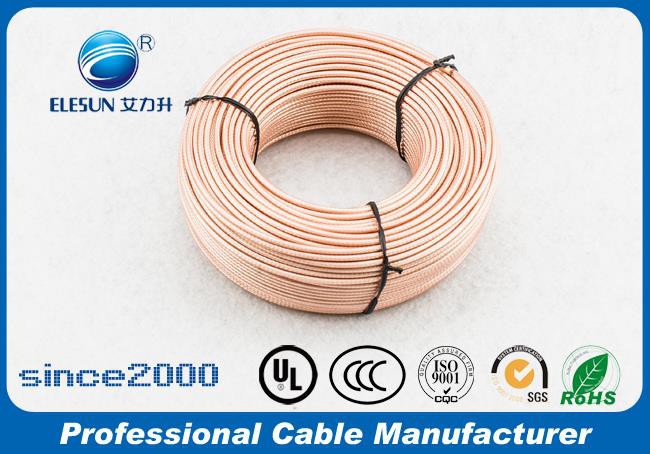

So, which one is better? Well, it really depends on your specific needs. If you need a cable that's strong and can withstand a lot of physical stress, copper-clad steel might be the way to go. But if weight is a major factor, copper-clad aluminum could be a better option.
Now, let's take a look at some of the benefits of using RG178U. One of the biggest advantages is its flexibility. This cable can be bent and twisted without losing its electrical performance, which makes it ideal for applications where the cable needs to be routed through tight spaces.
Another benefit is its low loss. RG178U has a low attenuation rate, which means that the signal can travel longer distances without significant loss. This is especially important in applications where the signal needs to be transmitted over long distances, such as in telecommunications.
In addition to RG178U, we also offer other types of coaxial cables, such as RG316 High Temperature Coaxial Cable and RG180 High Temperature Coaxial Cable. These cables are designed to withstand high temperatures, making them suitable for use in harsh environments.
We also have High Quality 50ohms Coaxial Cable (RG58S-BC-CCA), which is a popular choice for many applications. This cable offers a good balance of performance and cost, making it a great option for those on a budget.
If you're in the market for coaxial cables, I'd highly recommend considering RG178U. It's a reliable and high-performance cable that can meet the needs of a wide range of applications. And if you have any questions or need more information, don't hesitate to reach out. We're here to help you find the right cable for your specific needs.
In conclusion, the inner conductor material of RG178U can be either copper-clad steel or copper-clad aluminum, each with its own advantages. Whether you choose RG178U or one of our other coaxial cables, you can be sure that you're getting a high-quality product that will meet your needs. So, if you're interested in purchasing coaxial cables, feel free to contact us to discuss your requirements and start the procurement process.
References:
- General knowledge about coaxial cables and their materials.
- Industry standards and specifications for RG178U and other coaxial cables.


