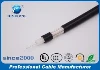
In the realm of telecommunications and electronics, coaxial cables play a pivotal role in transmitting signals efficiently. Among the various types of coaxial cables, RG - 59A has been a popular choice for many applications, including cable television, CCTV systems, and other low - to medium - frequency signal transmissions. One of the crucial parameters that affect the performance of RG - 59A is its group delay.
Understanding Group Delay
Group delay is a concept that describes the time it takes for a group of frequencies within a signal to travel through a medium, in this case, the RG - 59A coaxial cable. It is defined as the derivative of the phase shift of the signal with respect to the angular frequency. Mathematically, if (\phi(\omega)) is the phase shift as a function of the angular frequency (\omega), the group delay (t_g) is given by:
[t_g=-\frac{d\phi(\omega)}{d\omega}]
In simpler terms, group delay measures how much different frequency components of a signal are delayed as they pass through the cable. A constant group delay across the frequency range of interest is desirable because it ensures that all frequency components of a signal arrive at the destination at the same time. If the group delay varies significantly with frequency, it can cause distortion in the signal, leading to issues such as signal degradation, inter - symbol interference in digital systems, and a loss of fidelity in analog systems.
Factors Affecting the Group Delay of RG - 59A
Several factors influence the group delay of RG - 59A coaxial cable.


Dielectric Material
The dielectric material used in the cable is a major factor. RG - 59A typically uses a polyethylene (PE) dielectric. The dielectric constant (\epsilon_r) of the material affects the velocity of propagation of the signal in the cable. The velocity of propagation (v) is given by (v = \frac{c}{\sqrt{\epsilon_r}}), where (c) is the speed of light in a vacuum. A higher dielectric constant will result in a lower velocity of propagation and thus a longer group delay. Different types of polyethylene with varying dielectric constants can be used in RG - 59A cables, which will lead to different group delay characteristics.
Cable Geometry
The physical dimensions of the cable, such as the inner conductor diameter, outer conductor diameter, and the thickness of the dielectric layer, also play a role. The characteristic impedance (Z_0) of the cable is related to its geometry and is given by (Z_0=\frac{138}{\sqrt{\epsilon_r}}\log(\frac{D}{d})), where (D) is the inner diameter of the outer conductor and (d) is the diameter of the inner conductor. Any changes in these dimensions can affect the group delay. For example, a larger inner conductor diameter or a smaller outer conductor diameter may change the capacitance and inductance per unit length of the cable, which in turn affects the group delay.
Frequency
The group delay of RG - 59A is frequency - dependent. As the frequency of the signal increases, the group delay may change. In general, at higher frequencies, the skin effect becomes more pronounced. The skin effect causes the current to flow near the surface of the conductors, increasing the effective resistance and changing the electrical properties of the cable. This can lead to an increase in the group delay at higher frequencies.
Measuring the Group Delay of RG - 59A
There are several methods to measure the group delay of RG - 59A. One common method is to use a network analyzer. A network analyzer can measure the phase response of the cable over a range of frequencies. By taking the derivative of the phase response with respect to frequency, the group delay can be calculated.
Another approach is to use a time - domain reflectometer (TDR). A TDR sends a short pulse into the cable and measures the time it takes for the pulse to travel to the end of the cable and back. By analyzing the shape of the reflected pulse, information about the cable's electrical properties, including the group delay, can be obtained.
Typical Group Delay Values for RG - 59A
The group delay of RG - 59A can vary depending on the specific cable construction and the frequency range. In general, for frequencies in the range of 5 - 1000 MHz, the group delay of RG - 59A is typically in the range of 50 - 70 nanoseconds per 100 meters. However, these values can be affected by factors such as the quality of the cable, the manufacturing process, and the operating environment.
Comparison with Other Coaxial Cables
When comparing RG - 59A with other coaxial cables, it's important to consider their group delay characteristics. For example, the RG12 Coaxial Cable and RG216 U Coaxial Cable may have different group delay values due to their different construction and dielectric materials. The Multi - core 75 Ω Coaxial Cable also has its own unique group delay properties, which are influenced by the number of cores and the overall cable design.
Importance of Group Delay in Applications
In applications such as cable television, a consistent group delay is essential to ensure that all channels are received with the same time delay. If the group delay varies too much between different frequency channels, it can lead to issues such as audio - video synchronization problems.
In CCTV systems, a stable group delay is important for accurate image transmission. Any significant variation in group delay can cause blurring or distortion in the video signal.
Our Offer as an RG - 59A Supplier
As a leading supplier of RG - 59A coaxial cables, we understand the importance of group delay in various applications. Our RG - 59A cables are manufactured with high - quality materials and strict quality control processes to ensure consistent group delay characteristics. We offer cables with different specifications to meet the diverse needs of our customers.
If you are in the market for RG - 59A coaxial cables and are concerned about group delay and other performance parameters, we invite you to contact us for a detailed discussion. Our team of experts can provide you with in - depth information about our products and help you select the most suitable cable for your application. Whether you are working on a small - scale project or a large - scale installation, we have the right solution for you.
References
- Pozar, D. M. (2011). Microwave Engineering (4th ed.). Wiley.
- Johnson, H. W., & Graham, M. (2003). High - Speed Signal Propagation: Advanced Black Magic. Prentice Hall.
- IEC 61196 - 1:2018, Coaxial cables for radio frequency applications - Part 1: Generic specification.