

As a supplier of RG - 316 high - temperature coaxial cables, I've received numerous inquiries about how our product performs in low - temperature environments. In this blog, I'll share some in - depth insights into the performance of RG - 316 in such conditions.
Physical Properties of RG - 316 in Low Temperatures
RG - 316 is a well - known high - temperature coaxial cable, but its behavior in low - temperature settings is equally important. The outer jacket of RG - 316 is typically made of materials that are designed to maintain their integrity across a wide temperature range. In low - temperature environments, the jacket material may become stiffer. This stiffness can affect the cable's flexibility. For example, at extremely low temperatures, say around - 40°C, the cable may not bend as easily as it does at room temperature. However, this doesn't necessarily mean that the cable's functionality is compromised.
The dielectric material inside the RG - 316 also plays a crucial role. In low temperatures, the dielectric constant may change slightly. This change can have an impact on the cable's electrical performance, such as the characteristic impedance. But modern RG - 316 cables are engineered to minimize these effects. The manufacturers take into account the potential variations in the dielectric properties and design the cable to ensure that the impedance remains within an acceptable range even in cold conditions.
Electrical Performance in Low Temperatures
One of the key electrical parameters of RG - 316 is its attenuation. Attenuation refers to the loss of signal strength as it travels through the cable. In low - temperature environments, the attenuation of RG - 316 may change. Generally, as the temperature drops, the attenuation may increase slightly. This is because the electrical conductivity of the cable's conductors can be affected by the cold. The electrons in the conductors move less freely at lower temperatures, which can lead to more resistance and thus higher attenuation.
However, the increase in attenuation is usually within a manageable range for most applications. RG - 316 is designed to provide reliable signal transmission even in challenging environments. For example, in communication systems where RG - 316 is used for data transfer, the system can be designed to compensate for the slight increase in attenuation. This can be achieved through the use of signal amplifiers or by adjusting the transmission power.
Another important electrical property is the return loss. Return loss measures how well the cable matches the impedance of the connected devices. In low - temperature conditions, the change in the cable's physical properties can potentially affect the return loss. But again, the design of RG - 316 helps to maintain a good return loss performance. The careful selection of materials and the precise manufacturing process ensure that the cable maintains a consistent impedance match even in cold environments.
Comparison with Other High - Temperature Coaxial Cables
When comparing RG - 316 with other high - temperature coaxial cables such as RG304 High Temperature Coaxial Cable and RG393 High Temperature Coaxial Cable in low - temperature environments, there are some differences.
RG304 is known for its high - frequency performance. In low temperatures, it may have a similar increase in attenuation as RG - 316, but its flexibility might be affected differently due to its different jacket and dielectric materials. RG393, on the other hand, is often used in applications where high power handling is required. In cold conditions, its power - handling capabilities may also be influenced by the change in electrical conductivity.
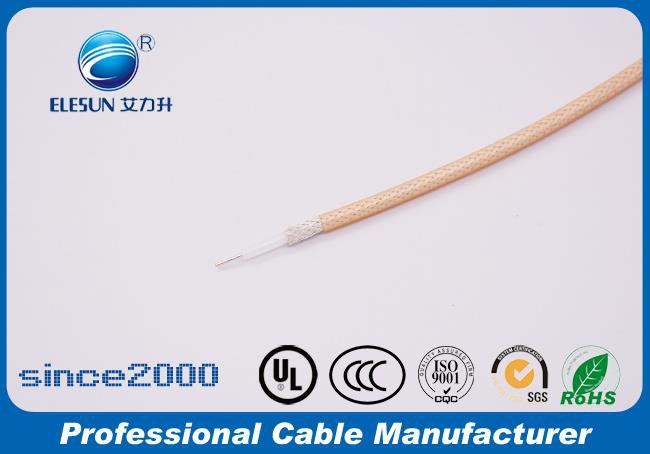

RG - 316 strikes a good balance between flexibility, electrical performance, and durability in low - temperature environments. It is suitable for a wide range of applications, from military communication systems to industrial automation.
Applications in Low - Temperature Environments
RG - 316 is widely used in various industries that operate in low - temperature environments. In the aerospace industry, for example, it is used in aircraft communication systems. These systems need to function reliably at high altitudes where the temperature can be extremely low. RG - 316's ability to maintain its electrical performance in cold conditions makes it a preferred choice for such applications.
In the oil and gas industry, where exploration and production often take place in cold regions, RG - 316 is used for data transmission between sensors and control systems. The cable's resistance to low temperatures ensures that the data is transmitted accurately, even in harsh Arctic or Antarctic conditions.
Maintenance and Handling in Low Temperatures
When using RG - 316 in low - temperature environments, proper maintenance and handling are crucial. It is important to store the cable in a temperature - controlled environment before installation. During installation, care should be taken to avoid excessive bending or kinking of the cable, especially when it is cold and less flexible.
Regular inspections of the cable are also necessary. Check for any signs of damage, such as cracks in the jacket or loose connections. In case of any damage, the cable should be replaced immediately to ensure the reliability of the system.
Conclusion
In conclusion, RG - 316 performs well in low - temperature environments. Its physical and electrical properties are designed to withstand the challenges posed by cold conditions. While there may be some minor changes in performance, such as a slight increase in attenuation and a decrease in flexibility, these can be managed through proper system design and maintenance.
If you are looking for a high - quality coaxial cable for low - temperature applications, RG316 High Temperature Coaxial Cable is an excellent choice. We, as a supplier, are committed to providing you with the best products and services. If you are interested in purchasing RG - 316 or have any questions about its performance in low - temperature environments, please feel free to contact us for further discussion and procurement.
References
- Manufacturer's specifications for RG - 316, RG304, and RG393 coaxial cables.
- Industry research on the performance of coaxial cables in low - temperature environments.


